Events

AIC-SOA Foundation Conducts Central Zone Odisha AI Symposium-2025
The Odisha AI Hackathon 2025, an integral part of the Odisha AI Symposium-2025, was conducted across the state in four Regional Nodal Centres with AIC-SOA Foundation at the Institute of Technical Education and Research (ITER), SOA Deemed to be University here, hosting the event for central zone.
SOA was designated as the Central Zone Nodal Centre and entrusted with hosting and coordinating the regional hackathon activities for the seven districts of Khurda, Cuttack, Puri, Jagatsinghpur, Jajpur, Kendrapara and Nayagarh.
As part of the initiative, offering of concepts closed on December 5 with 107 ideas submitted while the online concept evaluation round was held on December 7 where 48 shortlisted teams presented their proposals virtually.
Based on merit and innovation, 16 teams were selected for the prototype stage. The prototype demonstration round for Central Zone was held on December 10 at AIC-SOA Foundation with the jury members being Dr. Sheetal Prusty of Software Technology Park of India (STPI), Mr. Sameer Patro of Microsoft India Private Ltd, Dr. Kaliprasanna Swain and Dr. Sakuntala Mohapatra, both of Trident Academy of Technology, Bhubanesar.
The jury members engaged with participants and selected the top three teams for advancement to the Odisha AI Symposium.
The selected teams will now present their refined innovations at the Odisha AI Symposium on December 18 joining the winners from the other three Regional Nodal Centres for state level recognition and additional awards.
The hackathon, conducted under the patronage of the Odisha Society of Americas (OSA) and Odisha AI, aligns with the Odisha AI Policy, Odisha Vision and India AI Mission. It aims to strengthen AI awareness, foster student and startup-led innovation and address real world challenges through AI driven solutions across diverse sectors.
In the central zone competition, Team Plasticure, which presented a project on development of Super Clean Post-consumer Recycled (PCR) plastic via AI and Solvent-Assisted Advanced Recycling Technique for Food Grade Application won the first prize of Rs. 12,000. The team members comprised Dr. Jyoti Agarwal, Mr. Aman Patra and Ms. Samhita Sukanya.
Team G1 won the second prize of Rs. 8,000 presenting a project on AI-enabled ‘Not Safe for Work’ content identification for safe internet for kids. Its members were Ms. Bhagyashri Valecha, Mr. Uday Garg, Ms. Mili Gupta and Mr. Manish Kumar Tiruwar.
Smart Bloom won the third prize f Rs. 5000 for its project, IoT-driven Automated Pollination System for Vertical Farming. Its members were Mr. Ankit Kumar and Mr. Avinash Kumar.
The winning teams will receive continued mentoring to prepare for their presentations at the Odisha AI Symposium. AI researchers, practitioners, students and technology enthusiasts are invited to attend the India AI Symposium and witness the finalist teams present their cutting -edge AI innovations. Registration can be made at https://odishaaisummit.org/symposium.

India’s Bioeconomy to reach 300 billion dollars by 2030
India’s bioeconomy, which includes biotech, pharma and agriculture, officially valued at 165 billion dollars in 2024, was expected to reach 300 billion dollars by 2030, Prof. Sudhir Kumar Sopory, President of the Biotech Research Society, India (BRSI), said on Monday.
The government had launched Biopharma Mission at the national level while other programs included Bio AI Hubs, Bioagriculture and Bioenergy, Prof. Sopory said while addressing the inaugural session of the three-day International Conference on ‘Biotechnology for Sustainable Development and Circular Economy’ at the SOA Deemed to be University here.
The National Biopharma Mission is an industry-academia collaborative mission for accelerating biopharmaceutical development in the country under which the government has launched programs to create an enabling ecosystem to promote entrepreneurship and indigenous manufacturing.
The conference, which is being attended by 40 eminent scientists from 28 different countries has been organised by the Centre for Industrial Biotechnology Research (CIBR) of SOA in collaboration with the BRSI.
Prof. Ashish Ghosh, Director of Indian Institute of Information Technology (IIIT) Bhubaneswar, who graced the program as the chief guest, focused on the use of biotech for the betterment of human society.
“Whatever has happened is for transformation which has been a big boost for improving the quality of human life and most of these transformation has come from the biotech sector,” he said while pointing out that most of the vaccines invented so far have been biotech products including the vaccine against the Covid-19 infection.
The conference, he hoped, would serve as a platform for intense discussion on how to use biotech for the good of humanity.
The International Bio-processing Association (IBA) awards were presented to Prof. A.A. Koutinas of University of Patras, Greece, and Prof. Suzana Ferreira Dias of University of Agriculture, Lisbon, Portugal. Prof. Koutinas was honoured for his work in the field of Food Biotechnology while Prof. Dias was given the award for her research in the field of Food Engineering.
The session was also addressed by Dr. Binod Parameswaran, COE, BRSI, Prof. Marina Tisma of Josip Juraj Strossmayer University, Croatia and Prof. Christian Larroche of Universite Clermont Auvergne, Clermont Ferrand, France. Prof. Prashanta Kumar Patra, Pro-Vice Chancellor, SOA, presided over the program which was also addressed by Prof. Hrudayanath Thatoi, Director, CIBR and Conference Chair.
Prof. Sasmita Mohanty, Convenor of the conference, introduced the guests while Dr. Amrita Banerjee, Convenor of the event, proposed the vote of thanks.


3rd SOA Literary Festival begins, Javed Akhtar honoured with 1st SOA Sahitya Samman
The 3rd edition of SOA Literary Festival kicked off on Saturday with Odisha governor Dr. Hari Babu Kambhampati asserting that though technology had been expanding and reshaping human relationship, it could not replace the depth of human experience.
“At present, Artificial Intelligence has been reshaping communication, creativity and even human relationship, but the future influenced by AI will still depend on empathy, ethical judgment and ability to imagine what lies ahead,” Dr. Kambhampati said while speaking at the inaugural ceremony of the two-day festival at SOA campus here.
The ceremony was graced by legendary poet, writer, scriptwriter and thinker Javed Akhtar who was presented with the first SOA Sahitya Samman on the occasion.
The award comprises a citation, a shawl, a silver idol of Goddess Saraswati and cash prize of Rs. seven lakh. Instituted this year, the award will be presented to an eminent litterateur whose work exemplifies excellence, creativity and intellectual depth.
This is the third Literary Festival organised by the SOA Centre for Preservation, Propagation and Restoration of Ancient Culture and Heritage of India (PPRACHIN) which is being attended by more than 100 poets, writers, novelists, theatre and media persons from across the country many of whom will be speaking at 30 different sessions over two days.
The theme of the festival this time is ‘Culture, Creativity and Artificial Intelligence’ focusing on the impact of technical innovation on human creativity and literature.
The program was presided over by SOA Vice-Chancellor Prof. Pradipta Kumar Nanda while Dr. K. Sreenivasarao, former Secretary of Sahitya Akademi and Vice-President of SOA attended as guests of honour. Dr. Gayatribala Panda, Head, PPRACHIN, welcomed the guests while Prof. Jyoti Ranjan Das, Dean (Students Welfare) and Chief Coordinator of the festival, proposed the vote of thanks.
Dr. Kambhampati congratulated Akhtar on being chosen as the recipient of the first SOA Sahitya Samman while stating that his extraordinary contribution as a poet, lyricist and scriptwriter had shaped the cultural consciousness of India for more than five decades. He has given the voice to human emotion enriching Indian literature and cinema, he said.
“The honour conferred on him elevates the prestige of the award in its first year,” he said.
Describing the SOA Deemed to be University as a premier institution of higher learning, Dr. Kambhampati said the work being done by PPRACHIN and its dedication to research and digitalization points its steadfast commitment to conservation.
“A society that reads thinks, a society that thinks becomes one that progresses,” he said while describing literature as the companion in moral development.
Long before modern system of education emerged, stories, poems and ethics taught society truth, justice, courage and compassion, he said adding literature acts as a mirror to the society, challenges injustice, shows social inequalities and is a transformative course that shapes character, inculcates sympathy and expands the world view.
Akhtar, replying to his felicitation and presentation of the award, said he was overwhelmed by the honour bestowed on him. “It is a great opportunity and honour to be invited by such a university,” he said.
Describing language, culture, mythology, poetry and art as great resources, Akhtar said when India gained independence the country could not even manufacture a needle, but today it had become one of the most industrialized nations of the world.
“But in our pursuit of material achievement, we have left some baggage on the platform thinking they were not needed. Somewhere we started believing that we could not carry everything we have, and culture is one of it,” he said.
‘River Daya’, the English translation of Dr. Gayatribala Panda’s book ‘Dayanadi’ and three books published by PPRACHIN—two Sabha Parvas and Madhya Parva of ‘Saroladas Mahabharatha’ were released on the occasion.
Akhtar, who was subsequently interviewed by actor and producer Vani Tripathy Tikoo on stage and interacted with faculty members and students, spoke about Artificial Intelligence saying technology had no morality. “It depends on how you use it,” he said.
Citing the example of nuclear energy, he said it could be used both for bad and good purposes.
“The resources in it are not bad. If you delve into history, people were afraid of all discoveries, even the steam engine describing it as the vehicle of the devil,” he said while stating that it could not be creative.
“At present, it has limitations and is dependent on data. What will happen in the future cannot be said now,” he said adding right now there is no challenge to human creativity.

IIC Regional Meet 2025 held at SOA, Ignites Innovation momentum in Eastern India
More than 500 academic leaders, policymakers, incubation managers, start-up founders, mentors and ecosystem enablers representing various higher education institutions in the east attended the regional meet of the Institution’s Innovation Council (IIC) for 2025 at the Siksha ‘O’ Anusandhan Deemed to be University (SOA) here on Tuesday.
The event, which was held under the aegis of the Innovation Cell of the All India Council for Technical Education (AICTE), Ministry of Education, provided a vibrant platform for knowledge exchange, startup showcasing and institutional collaboration to strengthen India’s innovation and entrepreneurial landscape.
The IIC framework had evolved into a national movement connecting more than 16,000 institutions and enabling countless student innovators to benefit from mentoring, knowledge networks and pre-incubation support, Dr. Dipan Sahu, Assistant Innovation Director, AICTE, informed the participants.
Prof. T.G. Sitharam, Chairman of AICTE, addressed the audience live from AICTE headquarters in New Delhi in which he spoke about the central government’s mission to institutionalize innovation practices across the country while transforming higher education campuses into engines of technological leadership.
The speakers included Dr. Jadumani Jena, former CEO of Telecom Sector Skill Council, Government of India, Dr. Bijay Kumar Sahu, Regional Manager, National Research Development Corporation, Mr. Ravi Eswarapu, CEO, Ratan Tata Innovation Hub and Prof. Deepak B. Pathak, IIT Bombay, who shared their insights on India’s emerging innovation ecosystem, the increasing relevance of market-ready technology solutions and the rising potential of academic incubators in driving knowledge-based entrepreneurship.
Ms. Rashmita Panda, CEO of Startup Odisha, elaborated on the state government’s proactive initiatives to encourage young innovators, promote institutional incubation capacity and build a world-class startup culture in the state.
Prof. Pradipta Kumar Nanda, Vice-Chancellor of SOA, spoke about the university’s continued commitment to fostering innovation-led academic excellence and nurturing student driven research with societal impact. Prof. Renu Sharma, Additional Dean (Student Affairs), delivered the welcome address.
Prof. Ashok Jhunjhunwala of IIT Madras, who delivered the virtual keynote address, articulated the challenges and milestones of India’s innovation journey, stressing the importance of risk-taking mindsets, market exposure and perseverance among budding entrepreneurs.
During the central inauguration of the event, streamed live from AICTE headquarters, Vice Chairman Dr. Abhay Jere and Member Secretary Prof. Shyama Rath underscored the need to build globally competitive innovation ecosystems within Indian universities and announced new pathways for funding and collaboration.
The event transitioned into parallel technical tracks which covered institutional innovation frameworks, IPR and technology transfer and financial sustainability for incubators. Speakers from various IIC institutions informed the participants on innovation strategies, IP and TRL frameworks, mentor engagement, national innovation repositories and opportunities under AICTE schemes.
The highlight of the day was the Innovation and Startup Showcase which was inaugurated by Prof. Damodar Acharya, former Chairman of AICTE and former Director of IIT Kharagpur. He interacted with YUKTI-supported innovators and appreciated the quality of prototypes and research-driven initiatives exhibited by the participating institutions.
Prof. Manas Kumar Mallick, Director, AIC-SOA Foundation and Institute of Technical Education and Research, conferred the awards and motivated innovators to keep refining their projects and actively leverage national-level platforms to access funding and market linkages.

Empowering Women is a strategic necessity to strengthen Governance: Diplomats
Empowering women to handle key political and social responsibilities is a strategic necessity to build an inclusive culture and strengthen governance, diplomats and representatives from eight countries in India said here on Monday.
The need to break down structural barriers and provide equal opportunities to women to enable them to flourish in different spheres is key to development and governance, the speakers said while addressing an international conference on ‘Redefining Leadership: The Rise of Women in Global Governance’ at the SOA Deemed to be University.
“The participation of women in governance is needed and they must be fully involved as they bring innovation and resilience to whatever they do,” Mr. Juan Antonio March Pujol, Ambassador of Spain, said. “Human dignity should be at the centre of governance and it should be accepted that leadership is not the responsibility of a few. It should be inclusive and compassionate,” Mr. Pujol said.
The conference, which was presided over by SOA Vice-Chancellor Prof. Pradipta Kumar Nanda, was also addressed by Mr. Dharmakumar Seeraj, Ambassador of Guyana, Dr. Abdenor Khelifi, Ambassador of Algeria, Ms. Aisheth Azeema, High Commissioner of Maldives, Ms. Harisoa Lalatiana Accouche, High Commissioner of Seychelles, Mr. Kayshav Persaud Tewari, First Secretary, Embassy of Guyana, Mr. Antonio Maria De Jesus Dos Santos, Second Secretary, Embassy of Timor Leste and Ms. Arlette Gabriela Bustamante Garcia, Counsellor from the Embassy of Bolivia. Prof. Neeta Mohanty, SOA’s Pro-Vice Chancellor welcomed the diplomats.
Describing it as an ‘interesting subject’, Mr. Seeraj said Guyana, a small country with a population of 8,00,000 had been making efforts to bring parity and equality in governance with women occupying crucial positions in the system. The government has been making investment in women’s health and economic empowerment.
Quoting research findings, Mr. Seeraj said at the present rate of progress it will take 130 years from now to ensure gender equality.
“Around 90,000 women are being trained in Guyana in various domains but much more needs to be done,” he said adding 37 per cent of the country’s population were of Indian origin.
Dr. Abdenor Khelifi, Ambassador of Algeria, said women in his country had displayed extraordinary courage as leaders while the nation had taken bold steps to encourage women to take part in the political process. “Fifty per cent of judges in Algeria are women while girls account for 63 per cent of university students in the country,” Dr. Khelifi said.
Ms. Aisheth Azeema, High Commissioner of Maldives, said traditionally, women have been the backbone of the society in her country and were playing a crucial role in climate advocacy. “There is no position women cannot reach,” she said adding such conferences would go a long way in creating a more resilient world.
Ms. Harisoa Lalatiana Accouche, High Commissioner of Seychelles, said leadership was not defined by gender but by vision, resilience and empathy. The new government which was sworn-in in Seychelles two weeks ago had eight young women in the list of 14 ministers, she said adding a 35-year-old woman served as the Speaker of the National Assembly. Prof. Jyoti Ranjan Das, SOA’s Dean (Students’ Welfare), proposed the vote of thanks.

There is an inseparable linkage between Law and Literature: Hon’ble Mr. Justice Mishra
Law and literature are two distinct and different disciplines but there is an inseparable linkage between the two, Hon’ble Mr. Justice Sibo Sankar Mishra, Judge of the Orissa High Court said on Saturday.
“Law is an instrument which regulates human conduct and behavior while literature provides expression to human behavior which is a representation of law,” Hon’ble Mr. Justice Mishra said while speaking to students and faculty members of Siksha ‘O’ Anusandhan Deemed to be University here.
Hon’ble Mr. Justice Mishra was addressing the gathering as part of the SOA Lecture Series.
Pointing out that literature was often represented through writings, storytelling, painting and theatre, he said law could be found in literature and vice versa.
Citing the example of eminent novelist Fakir Mohan Senapati’s magnum opus, ‘Chha Mana Athaguntha’, Hon’ble Mr. Justice Mishra said the writer had exposed before the society how the colonial land laws were being misused during that time.
“Law was represented through Senapati’s story,” he said.
Hon’ble Mr. Justice Mishra also referred to novelist Pratibha Ray’s famous work ‘Yajnaseni’ saying the renowned writer had focused on how women were suppressed in the society under the yoke of patriarchal laws.
Shakespeare’s ‘Merchants of Venice’ also spoke about injustice and prejudices in society while the mythology ‘Mahabharat’ explained the battle between ‘dharma’ and ‘adharma’, he said.
Prof. Pradipta Kumar Nanda, Vice-Chancellor of SOA, presided over the program while Prof. Prabir Patnaik, Senior Professor in the SOA National Institute of Law (SNIL), introduced the speaker. Prof. Jyoti Ranjan Das, Dean (Students’ Welfare) conducted the program.
Referring to the ‘Ramayana’, Hon’ble Mr. Justice Mishra said the kidnapping of Sita pointed to the behavioral disorder of a person which was illegal. He was asked to return her but refused and was punished through execution.
Hon’ble Mr. Justice Mishra also cited the example of a series of old Hindi movies including ‘Shree 420’, ‘Awara’ and ‘Kanoon’ saying the law was sought to be taught to the society through cinematic representation through these films.
Recalling the story of the famous film ‘Andha Kanoon’, he said, the movie made it clear that no person could be punished twice for the same offence. Similarly, the nuances and technicalities of law were the focus of the film ‘No One Killed Jessica’, he added.
The famous dialogue ‘tarikh pe tarikh’ in the hindi film ‘Damini’ was a reflection of the legal system pointing to delayed justice, Hon’ble Mr. Justice Mishra said.
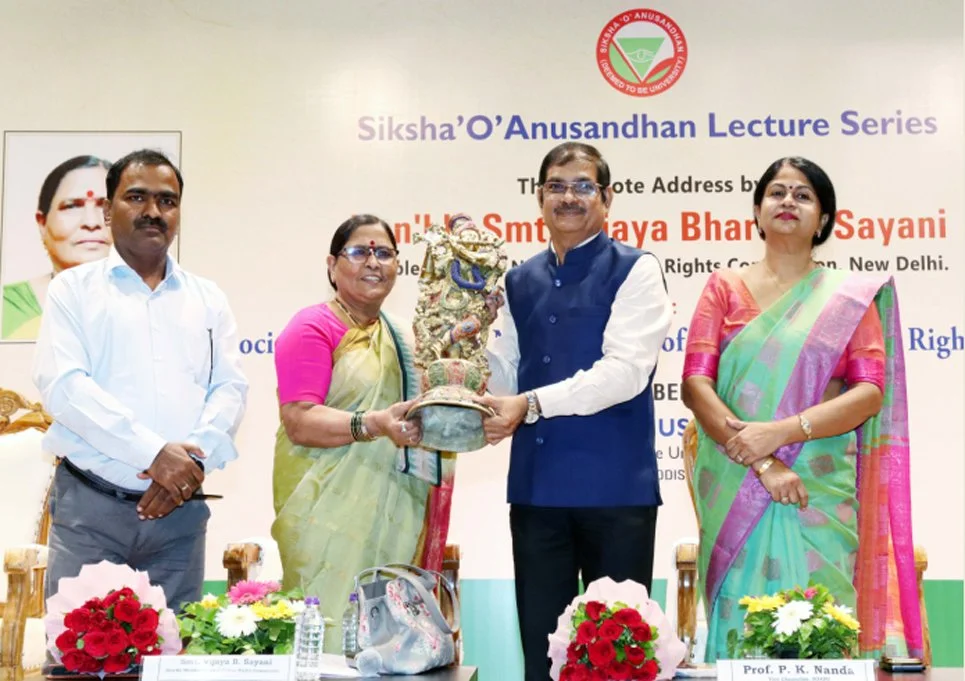
Inclusivity and Justice must match India’s economic growth: NHRC Member
Even as India advances steadily towards becoming a leading global economic power, challenges such as poverty, caste discrimination and gender inequality continue to focus on the collective effort required to strengthen the foundations of the democracy, Ms. Vijaya Bharathi Sayani, Member of the National Human Rights Commission (NHRC), observed on Friday.
“India is witnessing an era of rapid technological advancement and economic transformation. Yet, alongside this remarkable progress, we are also reminded of the social realities that call for renewed commitment to inclusivity and justice,” Ms. Sayani said while addressing students and faculty members at Siksha ‘O’ Anusandhan Deemed to be University here.
Referring to the October 2025 World Bank Report, she pointed out that around 342 million Indians—accounting for about 23.8 per cent of the population—lived on an income equivalent to 4.20 US dollars a day, with states like Uttar Pradesh, Bihar and Maharashtra facing higher rates of poverty. “These three states account for nearly 46 per cent of India’s poor. The government has been making lots of efforts to alleviate poverty over the last 15 years, yet deprivation continues to remain a pervasive shadow,” she noted.
Highlighting the gap between legal entitlements and lived realities, Ms. Sayani emphasized that ensuring affordable and equitable access to justice was essential, so that no citizen was deterred from seeking redress due to financial constraints.
Referring to the India Justice Report 2025, she highlighted the importance of strengthening access to justice so that no individual was denied liberty due to economic hardship. She noted that enhancing legal aid and ensuring timely bail can help reduce overcrowding in prisons, particularly in states like Uttar Pradesh, Bihar, and Maharashtra. “Empowering the underprivileged with equal legal opportunities is vital to fulfilling the Constitution’s promise of equality before the law,” she emphasized.
Presided over by Prof. Pradipta Kumar Nanda, Vice-Chancellor of SOA, the program also featured addresses by Prof. (Dr.) Neeta Mohanty, Pro-Vice Chancellor and Prof. Jyoti Ranjan Das, Dean (Students’ Welfare).
Ms. Sayani described the National Human Rights Commission, established under the Protection of Human Rights Act, 1993, as a crucial guardian of justice and dignity for the marginalized. “The NHRC is not merely a bureaucratic entity but has become a lifeline for the poor and underprivileged,” she affirmed.
Over the past 32 years, the NHRC has handled more than 23.79 lakh cases, including 2,981 of which had been taken up suo motu, and has provided monetary relief amounting to Rs. 263 crore in 8,924 cases, she informed. “These figures reflect not just the scale of our work, but our unwavering commitment to upholding the rights and dignity of every citizen,” Ms. Sayani concluded.
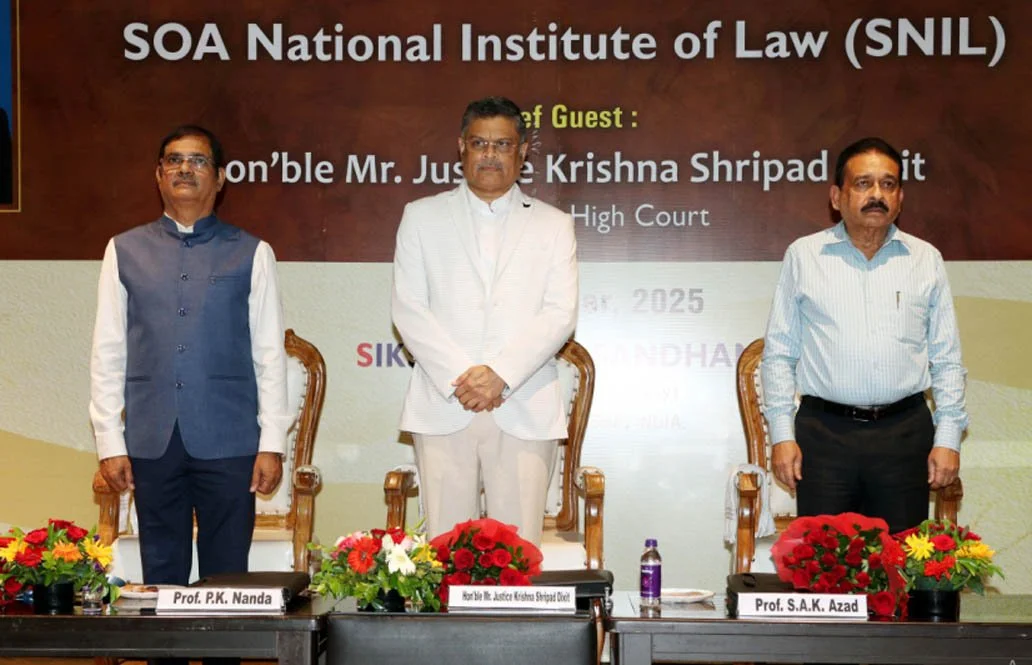
Be analytical, be meticulous — Hon'ble Justice Dixit’s message to the next generation of lawyers.
Students of law are required to be analytical, meticulous, proficient in both law and language and study a lot to shine in the profession, judge of Orissa High Court, Hon’ble Mr. Justice Krishna Shripad Dixit said on Saturday.
“One has to study different laws and subjects to acquire knowledge as you don’t know what kind of cases you may have to handle,” Hon’ble Mr. Justice Dixit said while addressing the 15th orientation program of the new batch of students of the SOA National Institute of Law (SNIL), faculty of legal studies of Siksha ‘O’ Anusandhan Deemed to be University here.
“Law speaks through language and you have to be proficient in language and know both law and language to deal with cases,” he said.
The students of law should be analytical and study logic besides being very sensitive to matters, Hon’ble Mr. Justice Dixit said while citing the case of the Jewish king Solomon and how he solved a difficult case.
The case involved two women and a baby with both claiming to be the mother of the child. It was a difficult case as DNA testing was unknown at that time.
Solomon, regarded as the wisest among all Jewish kings, ordered that the child be cut into two and handed over to the two women. At this, the actual mother of the baby screamed that the child should be given to the other woman as she wanted the baby to survive.
This decided the case and the actual mother of the child could be identified, Hon’ble Mr. Justice Dixit said.
The program was presided over by SOA Vice-Chancellor Prof. Pradipta Kumar Nanda while Prof. S.A.K. Azad, Dean of SNIL, delivered the welcome address.
Stating that there was no substitute for hard work, he cited the example of eminent Indian jurist Nani Palkhivala who had approached the chancellor of Bombay University, where he was a student of law, with the plea that the university library should be kept open beyond its closing time of 5 pm as he wanted to study.
The request was granted and he spent hours among piles of books which made him one of the country’s most eminent jurists, he said adding his hard work made him great.
“At the same time, mere hard work will not help unless you know your destination,” Hon’ble Mr. Justice Dixit said.
The legal profession is not a business but is based on morality. You should never delay or deprive justice, he said.
Citing illustrations about clever use of legal technicality, he referred to the case of an Indian lawyer who took up the case involving violation of a rule that no horse-drawn chariots or carts could ply outside the Vice Regal Palace.
In his argument, the lawyer said while the rule prohibited use of horses to ply chariots or carts in the prohibited area, the carriage in question had been drawn by mares--- female horses—and so no violation of the rules had taken place.
“Go for wider range of studies. One book is not the ethos of our country or our culture,” Hon’ble Mr. Justice Dixit said.
Quoting the Gita, he said it said there was nothing as sacred as acquiring knowledge.

Empathy. Education. Empowerment. Celebrating 19 years of ‘Jaago’, an inspiring initiative by (SOA) that continues to transform young lives through the selfless efforts of students.
Children are the future of the nation and it is the society’s responsibility to provide them a safe environment to grow and opportunity to get educated, Vice-President of Siksha ‘O’ Anusandhan, has said.
Students of the Siksha ‘O’ Anusandhan Deemed to be University (SOA) here have been doing a fantastic work by investing their time and energy in teaching slum children for the last 18 years, Ms. Das said while speaking at a program organised by ‘Jaago’, a platform of SOA students, on the occasion of Children’s
Day on Friday. The students have been involved in voluntarily educating children belonging to the neglected lower strata of society under the ‘Jaago’ banner and this endeavour will help them become ideal citizens of the country, she said.
Prof. Pradipta Kumar Nanda, Vice-Chancellor of the university, who attended the program as guest of honour said that ‘Jaago’ should emerge as a revolution to serve the society. He said all students of the university should get involved in the program.
The program was also addressed by SOA Pro-Chancellor Prof. (Dr.) Neeta Mohanty, Dean of Institute of Veterinary Sciences and Animal Husbandry, Prof. Sushanta Kumar Das and Dean (In-charge) of Institute of Agricultural Sciences, Prof. Kartik Chandra Sahu. Prof. Jyoti Ranjan Das, Dean (Students’ Welfare) welcomed the guests while Prof. Anita Panda, Mentor of Jaago, proposed the vote of thanks. The children and students also presented a cultural program.
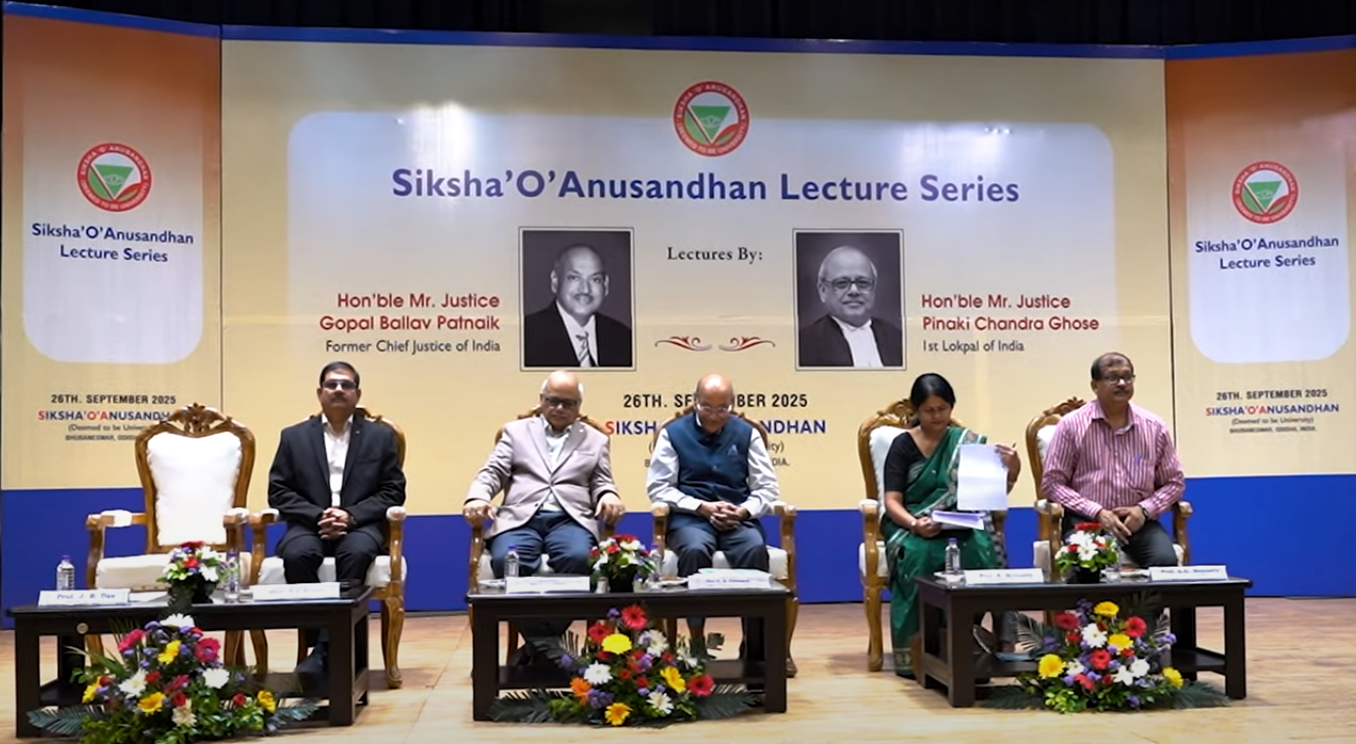
Education builds character, not just careers.” — A powerful message from former Chief Justice of India at SOA Lecture Series
Former Chief Justice of India, Justice Gopal Ballav Patnaik, delivered an inspiring lecture at Siksha ‘O’ Anusandhan (SOA), emphasizing that true nation building starts in the classroom. Speaking on “Students as Nation Builders — The Power of Young Minds in Shaping the Future”, he urged students to develop strong moral character, integrity, and compassion.
The event also featured Justice Pinaki Chandra Ghose, India’s first Lokpal, who spoke on the basic structure of the Indian Constitution and its role in safeguarding fundamental rights.
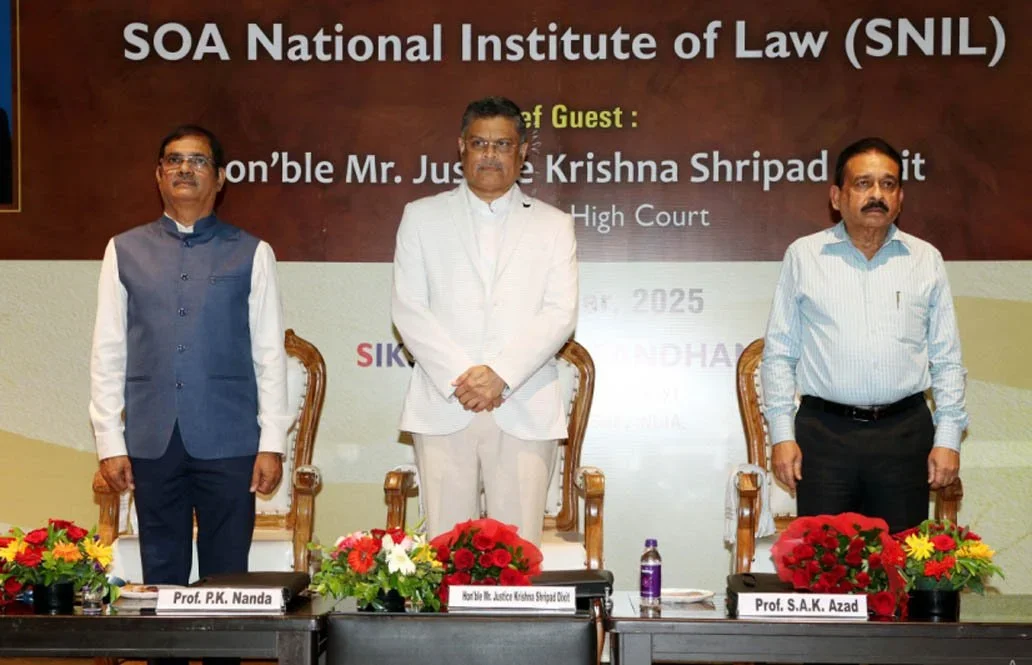
Respect for rule of Law key to safeguarding the Constitution: Hon'ble Justice Krishna Shripad Dixit
Respect for the rule of law is of paramount importance for the survival of the constitution, Hon'ble Mr. Justice Krishna Shripad Dixit, Judge of the Orissa High Court, said on Saturday.
“If we do not have respect for the rule of law, the constitution will fall down,” Hon'ble Mr. Justice Dixit said while delivering the Siksha ‘O’ Anusandhan Lecture at SOA Deemed to be University here.
Stating that the Indian Constitution had survived even after more than 100 amendments had been incorporated to it, Hon'ble Mr. Justice Dixit said all constitutional institutions including the judiciary, the Election Commission of India, the parliament, state legislatures and the Registrar General of India needed to be protected.
He was delivering the keynote address in the SOA Lecture Series titled ‘Making of Our Constitution.’
Referring to the ‘Allahabad Resolution’ of 1920 which proposed creation of a constitutional framework for India, he said a Constituent Assembly had been set up in 1946 before the country gained independence.
The constitution rested on a nation’s geographical area with defined borders, population, a legitimate government and ability to maintain international relations with other countries, he said.
When the bill to grant India independence was tabled in the British parliament, it was opposed by the leader of opposition Winston Churchill who said if independence was granted to India, “power will go to the hands of rascals, rogues, freebooters; all Indian leaders will be of low calibre and men of straw.”
“But India had proved Churchill wrong by launching 106 satellites in one go,” Hon'ble Mr. Justice Dixit said.
He said India was a great country because many religious faiths had come to the country. Islam had come to India before it had reached Saudi Arabia while Christianity arrived in the country before it went to Europe, he said.
India was a land of knowledge which had always moved towards the light, Hon'ble Mr. Justice Dixit said.
SOA Vice-Chancellor Prof. Pradipta Kumar Nanda presented a detailed account of the university’s activities and accomplishments while Prof. S.A.K. Azad, Dean of SOA National Institute of Law (SNIL), the university’s faculty of legal studies, welcomed the guest. Prof. Jyoti Ranjan Das, Dean (Students’ Welfare), proposed the vote of thanks.

140 Lives Touched in One Day – PAN SOA ITER Mega Blood Donation Drive
The Institute of Technical Education and Research (ITER), Faculty of Engineering of Siksha ‘O’ Anusandhan (SOA), successfully organised the PAN SOA ITER Mega Blood Donation Drive.
The initiative witnessed enthusiastic participation from students, faculty, and volunteers, standing as a testament to SOA’s commitment to community service, healthcare, and compassion.
The ceremony was inaugurated by Mrs. Saswati Dash, Vice-President, SOA, and attended by several distinguished dignitaries including Prof. (Dr.) Ashok Mohapatra, Principal Adviser (Health Sciences), Prof. P.K. Nanda, Vice-Chancellor, Prof. Neeta Mohanty, Pro-Vice Chancellor, Prof. P.K. Sahoo, Dean ITER, among others.
With the active support of the SUM Blood Bank team, comprising 10 doctors and medical staff, the drive achieved a remarkable milestone by collecting 140 units of blood in a single day.

There will be enough work in future, but no jobs: Dr. Anand Deshpande
The advent of Artificial Intelligence (AI) has ushered in exciting times with a question mark hanging on jobs, but students have to chart their own course by creating jobs, Dr. Anand Deshpande, Founder Chairman and Managing Director of Persistent Systems, said on Saturday.
“We are moving towards a situation where work will increase but jobs will decrease. Instead of looking for jobs, you have to think how to create jobs,” Dr. Deshpande said while having an interaction with students of SOA Deemed to be University here.
Replying to a question on AI and the future, he said AI would have amazing ability to solve problems and push up productivity.
AI writes better codes than humans today but it can also distort facts like no one can, Dr. Deshpande said adding two countries---USA and China-- were ahead today in the field of AI.
SOA Vice-Chancellor Prof. Pradipta Kumar Nanda presided over the program which was organised by the university and the Atal Incubation Centre-SOA Foundation. It was also addressed by Prof. Damodar Acharya, Chairman of SOA Advisory Board and Mr. Ripti Ranjan Dash, Director, Corporate Relations and Industry Engagement. Prof. Renu Sharma, Additional Dean (Student Affairs), Institute of Technical Education and Research (ITER), proposed the vote of thanks.
Dr. Deshpande, who heads the Pune-based global digital engineering company, said most of those born after 2000 were expected to live for 100 years considering the rapid progress medical science had been making in recent times and were expected to work for the next 60 years till 2085.
“You are living in India which is a happening place today but what you are learning now will not last 60 years. No company you join after leaving the university will last six decades,” he said.
Dr. Deshpande, who is an alumni of IIT Kharagpur which was the first institute to launch courses in Computer Science, studied and worked in the USA before returning to India in 1990 to launch his own company.
He advised the students to have an aspiration and purpose in life saying “you should know where you are going.”
“The need is for continuous learning while students should realize the importance of team work and networking. Don’t compromise your core values. What is important is loyalty to your profession,” he said.
Stating that it was normal to make mistakes, Dr. Deshpande said it was not a big deal.
Tennis legend Pete Sampras was told that he had a bad backhand but he had a great forehand. That did not stop him from winning 14 grand slam titles, he said.

World worried over Climate Change: Diplomats
Ambassadors and diplomats from eight different countries on Thursday expressed concern over the impact of ongoing climate change and global warming in the world while calling for focused action to save the planet.
“It is not a distant threat, it stands as a huge challenge before humanity,” Mr. Juan Antonio March Pujol, Ambassador of Spain, said while addressing the inaugural session of the 2-day international conclave on ‘Climate Change and Global Warming—Issues and Prospects’ organised by the SOA Deemed to be University here.
The representatives of the other countries who addressed the conclave included Mr. Alberto Guani, Ambassador of Uruguay, Mr. Javier Paulinich, Ambassador of Peru, Mr. Fernando Bucheli, Ambassador of Ecuador, Mr. Omar Castaneda Solares, Ambassador of Guatemala, Mr. Antonio Bartoli, Ambassador of Italy, Ms. Lalatiana Accouche, High Commissioner of Seychelles and Mr. Kayshav Tewari, Diplomat, High Commission of Guyana.
Dr. Mrutyunjay Mohapatra, Director General of Indian Meteorological Department (IMD), delivered the keynote address while Prof. (Dr.) Neeta Mohanty, Acting Vice-Chancellor of SOA presided. Prof. (Dr.) Prasenjit Mohanty, Pro-Vice Chancellor of SOA, welcomed the guests.
Prof. Uma Charan Mohanty, Distinguished Professor at SOA and an environmental expert, said that 17 speakers including scientists, researchers, academics and experts drawn from several top Indian institutions including the IMD, Indian Institute of Tropical Meteorology (IITM), ISRO and IITs, will be addressing the different sessions of the conference.
Ms. Accouche, High Commissioner of Seychelles, said her country, a small island nation in Africa, was worst affected as it was faced with rising sea levels, coastal erosion and extreme weather which posed significant threat to the country’s economy, particularly tourism and fishing industries, and its natural environment.
“Though we are the least contributor to the process of global warming, we are the worst affected by its impact,” she said.
Mr. Tewari echoed Ms. Accouche saying those who contributed the least to climate change were its biggest victims.
Guyana, with a population of eight lakh, had been pursuing policies to protect the environment and was now known as a green super power, he said.
The country had protected its pristine forest covering 85 per cent of the geographical area which served as a carbon sink, Mr. Tewari said adding countries needed to be compensated for the global good they did.
Dr. Mohapatra said release of greenhouse gases due to human and socio-economic activity had been responsible for the present situation and the impact had been reflected in extreme weather events.
Forests and wetlands, which served as natural sink for Carbon Dioxide, were shrinking due to deforestation and human activity. But measures to prevent deforestation and protect water bodies were being taken, he said.
Dr. Mohapatra said climate change was affecting the economy as there had been 6 to 10 per cent reduction in agricultural yield due to rising temperature. It was also adversely affecting fishing activity, he said adding it impacted lives and livelihood.
There was a need for installing early warning systems in regions vulnerable to extreme weather conditions while sustainable development practices should be pursued at the micro level to combat climate change, he said.
Mr.Pujol said anthropogenic activity had impacted the climate causing the sea level to rise by more than 20 cm since 1900 while countries were facing extreme weather events like cyclones, floods and drought.
Spain, he said, was committed to achieve carbon neutrality by 2050 and supported the initiatives being taken by the European community to address the situation.
Mr. Pujol said universities were the incubators to provide solutions to problems being faced by humanity and it was the students who should ensure that the planet remained a safe place.
Italian Ambassador Mr. Bartoli referred to the recent Texas floods saying nobody saw it coming. Italy had broken the records for extreme weather events, he said adding it was paradoxical that despite the advancement made by humans technologically it did not guarantee them control over nature.
Mr. Paulinich, who represents Peru, said that 71 per cent of the glaciers in his country, which were the prime source of water were on the decline. “The glaciers are retreating and facing extinction. It is not ice, but our future that is melting,” he said.

Purpose of education is to shape character: Hon'ble Justice Ramasubramanian, NHRC Chairman
The purpose of holistic education is to shape the character of the person while enabling his physical, mental, moral and spiritual development, Hon'ble Mr. Justice V. Ramasubramanian, Chairman of the National Human Rights Commission (NHRC), said on Friday.
“Education should form the character of the student while expanding his intellect, increasing the strength of mind and enabling the person to stand on his own legs,” Mr. Justice Ramasubramanian said while delivering a talk at the Siksha ‘O’ Anusandhan Deemed to be University (SOA) here.
Swami Vivekananda, the NHRC Chairman said, had set these four qualifying parameters for education to equip individuals with knowledge, intellect and spiritual awareness to live happy and fulfilling lives.
“A person may complete his or her course but no one can complete education as it extends from the womb to tomb,” he said.
SOA Vice-Chancellor Prof. Pradipta Kumar Nanda welcomed Hon'ble Mr. Justice Ramasubramanian while Prof. Santosh Kumar Rout, Dean of the Institute of Agricultural Sciences, introduced the speaker.
Citing several illustrations, Hon'ble Mr. Justice Ramasubramanian said the education system should be able to equip the student with character, mental strength, intellect and self-reliance.
Quoting philosopher and historian Will Durant’s famous statement that education was the progressive discovery of one’s ignorance, he said everyone needed to understand this truth.
“We have lot of literate people but are we educated?” he asked while stating that the courses in colleges and universities only introduced the student to the knowledge available in this world.
Justice Ramasubramanian said most students these days were heard saying that they were ‘getting stressed out’, a term rarely heard 40 years ago, which only pointed to the fact that the present generation had been so pampered that it was unable to face any problem.
“This explains why we can’t have a happy life when we have good education and everything we need,” he said adding education had failed to strengthen the mind of students.
“Today it is success which matters but we don’t understand what true success is. Completing education or landing a big job does not mean success. Life does not look at success as we do,” he said.
Hon'ble Justice Ramasubramanian narrated the story of a very successful 45-year-old chartered accountant in the USA who lost everything he had during the Global Financial Crisis that hit the country in 2008. “He didn’t know how to handle it and killed all his family members before committing suicide,” he said pointing out that despite his education and knowledge he did not possess mental strength.
“Do colleges and universities teach the students crisis management? People have degrees but are they learned?” he asked.
The need is to provide people the skill to face life and teach them the right attitude, he said.
Hon'ble Justice Ramasubramanian congratulated SOA Deemed to be University for the progress it had made during the last several years saying it had shown a lot of commitment.
Prof. Prabhat Kumar Sarangi, Professor at IAS, conducted the program while Prof. Renu Sharma, Additional Dean (Student Affairs) ITER proposed the vote of thanks.

India planning Modular Space Station by 2035: Dr. V. Narayana, Chairman of ISRO
The Indian Space Research Organisation (ISRO) is planning to put in space the Bharatiya Antariksh Station (BAS), a modular space station, by 2035, ISRO’s Chairman and Secretary of the Department of Space, Dr. V. Narayanan, said on Wednesday.
The launching of BAS will enhance India’s presence in space research and foster advancement in space technology, Dr. Narayanan said while having an interaction with students, researchers and faculty members of Siksha ‘O’ Anusandhan Deemed to be University (SOA) here.
“India’s first ever human space flight mission, ‘Gaganyaan’ is expected to be launched in March 2027 for which four test pilots are undergoing training to be astronauts,” he informed.
This will be preceded by launching of uncrewed missions to test systems as India’s objective is to become a global space power by 2047, Dr. Narayanan said adding only Russia, the United States and China had been successful to independently launch humans into space till now.
Dr. Narayanan, a rocket propulsion expert, said though India’s space program had started in 1962, it had traversed a long way technologically since then and was contemplating to take an Indian to the Moon and bring him back safely.
Pointing out that ISRO was established in 1969 by when the US had already become successful in putting Neil Armstrong on the Moon, he said despite the late start ISRO had made phenomenal progress and succeeded in putting the first 35 kg satellite in space in 1980.
“Since then, India has been able to develop six generations of launch vehicles and created a record by conceiving a 40-storey high rocket in only 27 days,” he said.
There was a time, Dr. Narayanan said, when India was mocked, insulted and denied access to cryogenic engine technology. But India had, since then, been able to develop three such engines, two of them indigenously.
“India is the only country which soft landed Chandrayaan-3 on Moon’s south pole and is the first to find water molecules on the lunar surface,” he said adding the country created a world record by placing more than 100 satellites in space on a single mission.
India is also the only nation to have reached Mars’ orbit in its very first attempt, Dr. Narayanan said.
Chandrayan-4, Dr. Narayanan said, would be a complex mission as it would be expected to bring back lunar sample. India planned to launch Chandrayaan-5 in collaboration with Japan.
One of ISRO’s significant achievement has been the successful completion of docking experiment involving two satellites which was executed with exceptional precision on January 16, 2025. The docking happened when the satellites were travelling at a speed of 28,400 km per hour, he said.
Subsequently, ISRO scientists successfully conducted the undocking experiment in a circular orbit, Dr. Narayanan said.
Prof. Damodar Acharya, Chairman of SOA’s International Advisory Board and former Director of IIT, Kharagpur was present.
SOA’s Vice-Chancellor Prof. Pradipta Kumar Nanda welcomed Dr. Narayanan while Prof. Renu Sharma, Additional Dean (Student Affairs), proposed the vote of thanks. Prof. Jyoti Ranjan Das, Dean (Students’ Welfare) conducted the program.
VETS have to understand the pain of animals
Veterinarians have the onerous responsibility of understanding the problem and pain of suffering animals and birds as they can’t express it themselves, Vice-President of Siksha ‘O’ Anusandhan (SOA) said on Saturday.
“Our civilization cannot exist without animals. Hence, taking care of them and understanding their problem with a proactive attitude is of great importance,” Ms. Das said while speaking at a function organised at the Institute of Veterinary Science and Animal Husbandry (IVSAH), faculty of veterinary sciences of SOA here, to mark the World Veterinary Day.
Ms. Das praised the growth of IVSAH, the newest institute added by SOA, saying it was doing well in various areas.
Referring to the theme for this year’s World Veterinary Day—‘Animal Health takes a Team’, she said she was happy to see the kind of care being provided to animals at the institute’s livestock farm.
Prof. (Dr.) Akshay Shah, Director of Chi University of Veterinary Acupuncture, who attended the program as the guest of honour, emphasized the use of acupuncture in treatment of animals and birds.
Prof. Pradipta Kumar Nanda, Vice-Chancellor of SOA, who presided over the program, said the future of humans was dependent on that of animals and birds. “We need to have a balance between the two for our existence,” he said.
Prof. Nanda also spoke about the veterinary clinic set up by SOA saying good care was being taken of animals and birds there.
Prof. Sushanta Kumar Das, Dean of IVSAH, welcomed the guests while Prof. Srinivas Rao proposed the vote of thanks.
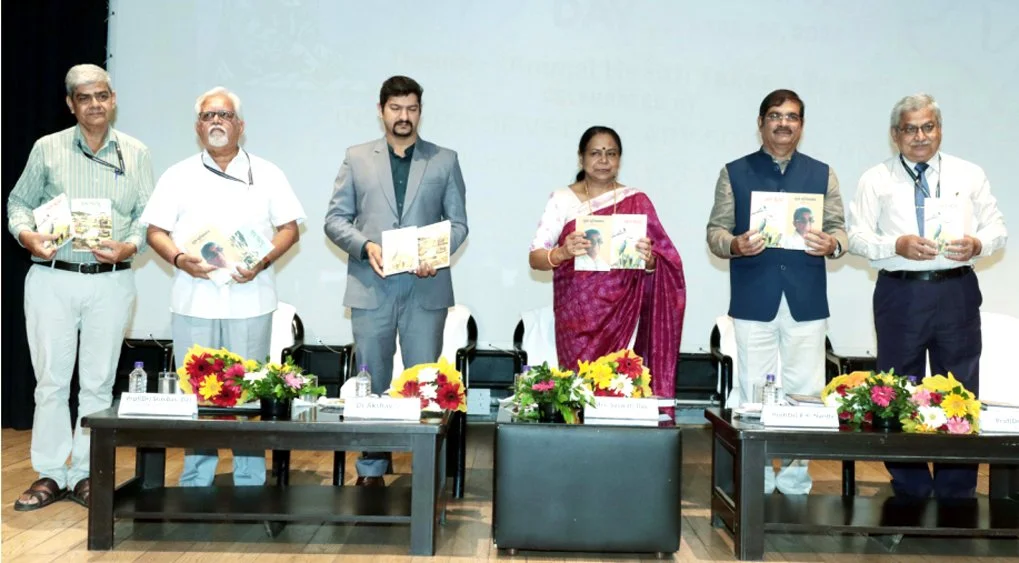
Books authored by professors of IVSAH were unveiled on the occasion while several veterinarians were felicitated. Prizes were distributed to students who had taken part in different competitions organised to mark the occasion.

Elysium 2025 (ITER | SOA)
Elysium Annual Student Event held at ITER, SOA University. 2025 Edition. Elysium-2025, a week-long fiesta showcasing an array of the limitless potential of its students came to a grand conclusion at the Institute of Technical Education and Research (ITER), faculty of engineering and technology of Siksha ‘O’ Anusandhan Deemed to be University here, on Wednesday.
Students were provided a platform to give expression to their talent in a variety of activities spanning coding to business, literature to art, music to dance and fitness to fashion.
“Each event was designed to challenge, inspire and push the boundaries and the students rose to the occasion while embracing the challenges and demonstrating remarkable skills,” Prof. Renu Sharma, Additional Dean (Student Affairs), said.
Prof. Sharma said Elysium was not just an event, it was a platform where talent met opportunity, learning met experience and dreams took flight.
Prof. Damodar Acharya, Chairman of SOA’s International Advisory Board and former Chairman of the All India Council for Technical Education (AICTE) who was the chief guest at the concluding function, urged the students to think differently and endevour to start something on their own.
“If you are studying to get a degree and then find a job, it’s not right. You have to be innovative and creative and excel not only in your chosen technical domain but in the socio-cultural arena as well,” he said adding both were important.
Prof. Acharya said the job market was shrinking and it could shrink further with the arrival of Artifiial Intelligence (AI).
The program was also addressed by Mr. Bijay Kumar Sahoo, Regional Manager and Head, National Research Development Corporation, Bhubaneswar and Dr. Manisha Acharya, Project Director, Ernst and Young. Both Mr. Sahoo and Dr. Acharya encouraged the students to be innovative and launch their own start-up.
SOA Vice-Chancellor Prof. Pradipta Kumar Nanda also spoke. Among others, Prof. Manas Kumar Mallick, Director, ITER, was present. Altogether 70 events, 40 of them technical and 30 cultural, were organised during the festival attracting large participation. Besides, 32 sports events were also held.
The student communities who played the vital role in the organization of the program included ITER Robotics Club, SOA Radio Club, Codex, Shristi, SOA Flying Community, GDG, Vogue-SOA Fashion Club, SOA Literary Club, Toneelstuk-The Stage Piece, SOA Music Club, Coding Ninjas, Innovation and Entrepreneurship Cell, Danza, Virtual Showreel, SOA Photography Club, Odanza and SOA Fitness Club.
The sports disciplines which were part of the festival included Futsal, Cricket, Volleyball, Basketball, Kabaddi, Badminton and Kho Kho. More than 350 students participated in the programs ‘Business Decoded’ and ‘Founder’s Arena’ which were held at the Atal Innovation Centre (AIC) which provided the students with real world business challenges while exposing them to expert mentorship. The guests gave away about 400 prizes to the students.

Cultural Event SOA University Proxima 2025 (ITER | SOA)
HR Conclave Event for SOA University and ITER SOA Students. Held in 2025. Shri Ashish Vidyarthi, Shri Vipul Goyal and others graced this event with their presence. The occasion was further strengthened by the presence of industry representatives.